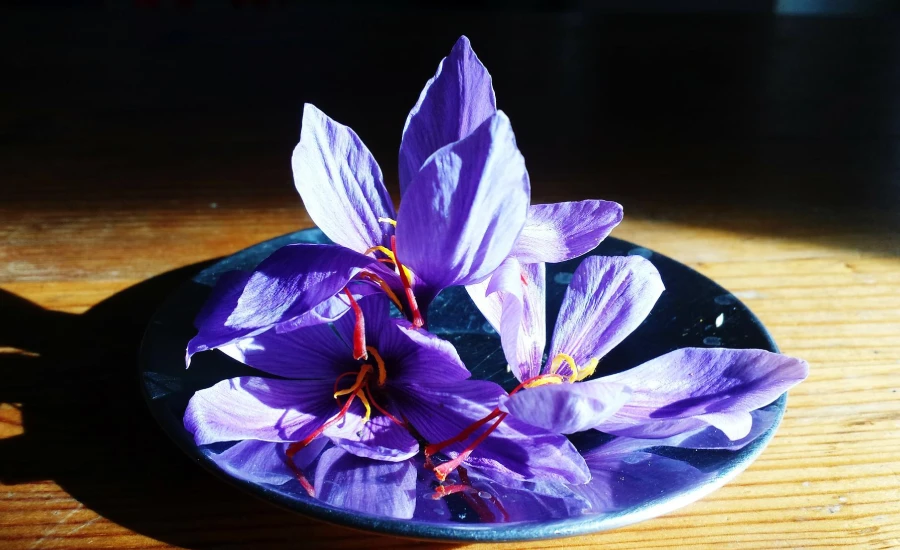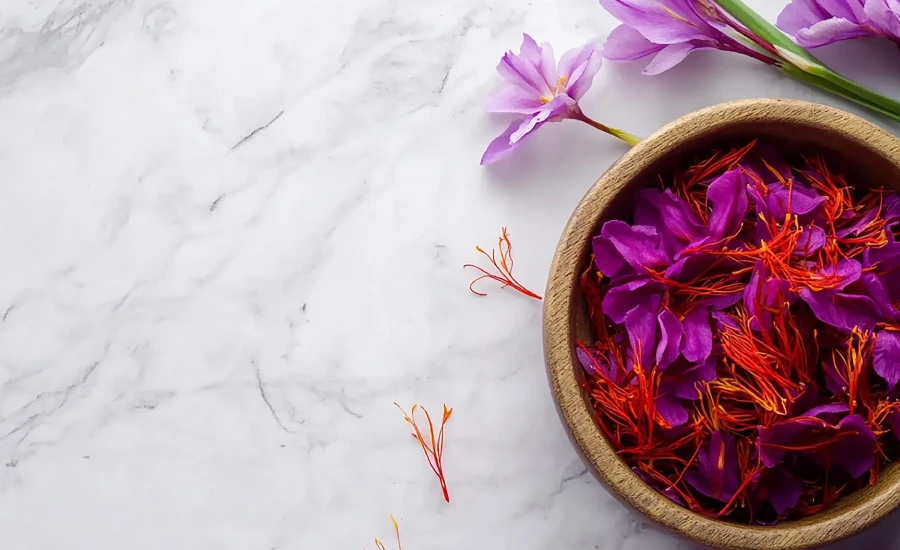

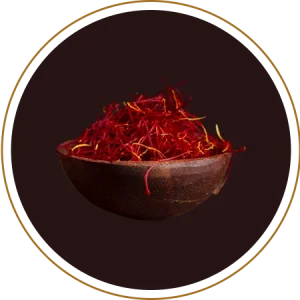
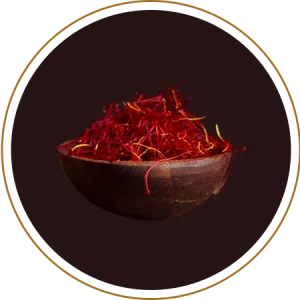

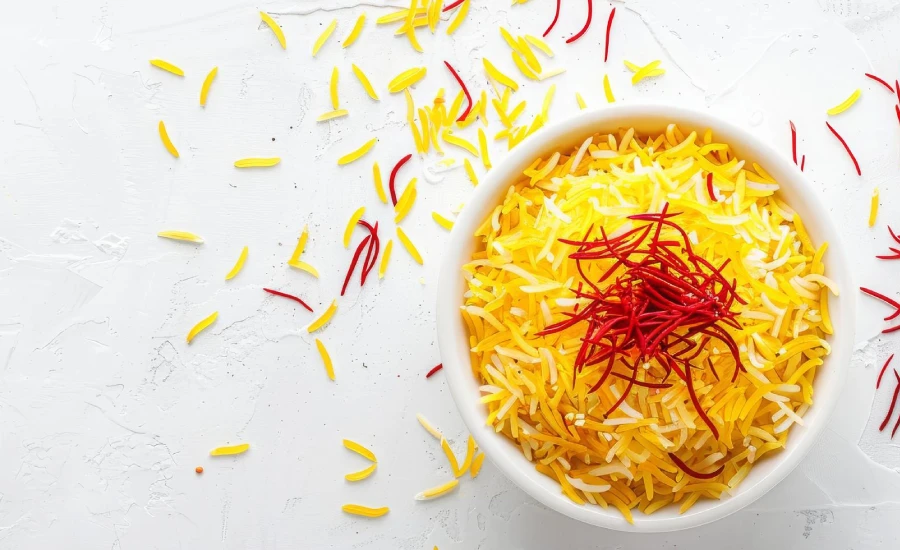
Saffron is one of the most expensive and precious spices in the world. It is known as “red gold” because of its medicinal benefits, unique taste, and distinctive color. In order for saffron to be produced with high quality. Bulbs should be planted on land with certain characteristics that ensure successful planting and increased production.
Suitable soil for growing saffron
The best soils for growing saffron aresandy loamy soilsthat are well-drained and well-aerated. The soil should be rich in organic matter. and free of excess salts. Because saffron is very sensitive to salt. The ideal pH of the soil is between 6 and 8. That is, the soil is moderately acidic or slightly alkaline.
Optimal climate conditions

Saffron grows best in areas with dry and temperate climates. Where summer temperatures are high. Its winters are relatively cold without reaching deep freeze. Saffron also needs a moderate amount of rainfall. However, it is preferable to plant in areas that are not subject to heavy rainfall. Excess water can lead to bulb rot.
Land selection in terms of elevation and location
Saffron is best grown in slightly higher ground. which is located between 1000 and 1800 meters above sea level. Such areas offer favorable temperatures and good exposure to sunlight. This stimulates good flowering. These areas are also often less humid. This reduces the likelihood of fungal diseases.
Countries and regions famous for saffron cultivation
Iran is India (especially the Kashmir region). Morocco is one of the most famous saffron-producing countries. In Iran. Large quantities of saffron are grown in Khorasan province. which is characterized by its sandy soil and dry climate. Some areas of Afghanistan, Spain, and Greece It is starting to enter the saffron production market due to the availability of suitable land.
Additional tips for farmers
Conclusion
The success of saffron cultivation depends largely on choosing the right land with good soil and a favorable climate. With the right agricultural guidelines. Abundant production and high quality can be achieved from this precious crop. This opens up promising economic prospects for farmers in Arab countries and beyond.